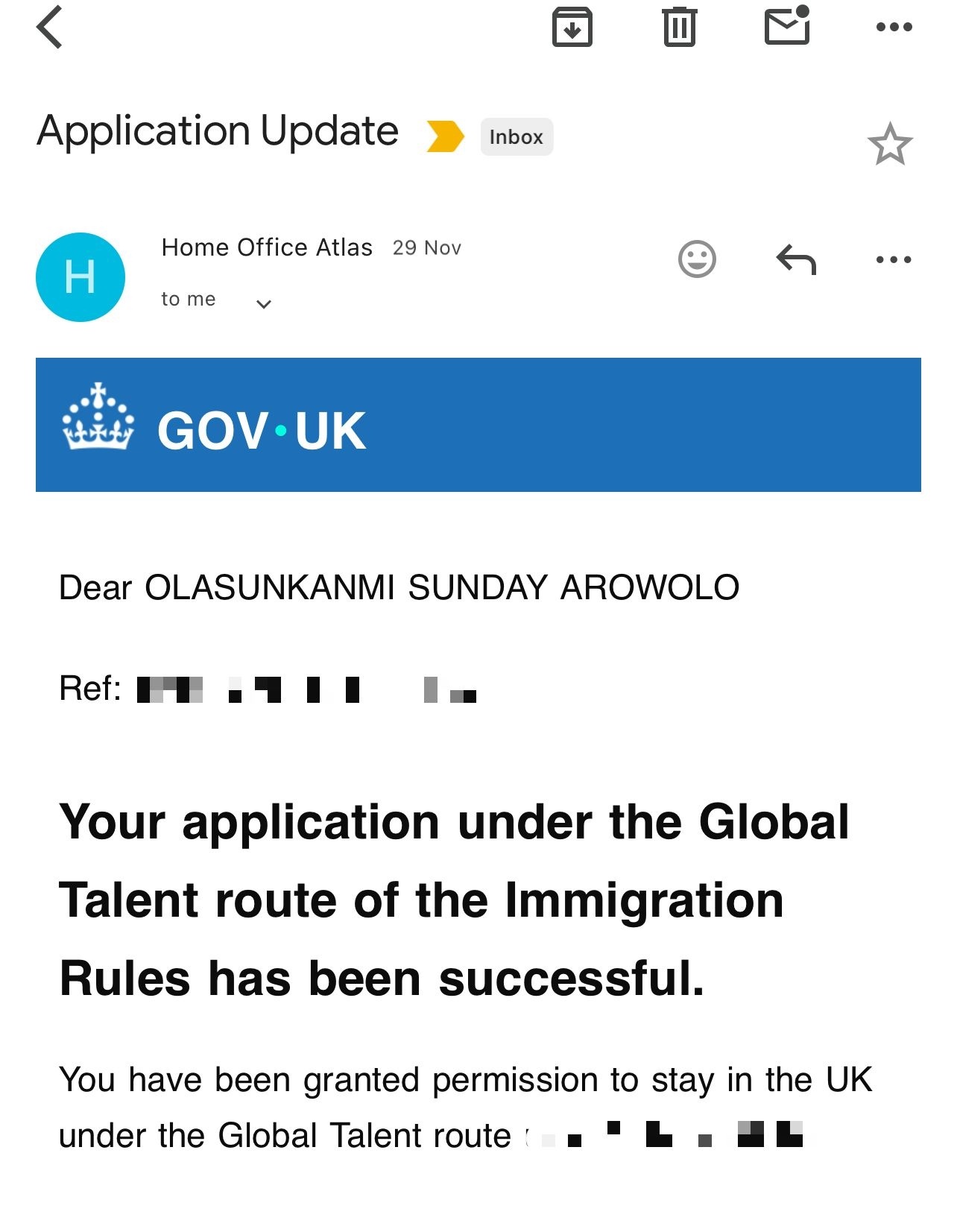
Olasunkanmi Arowolo shares his detailed journey to receiving a British Academy Global Talent endorsement – from completing a PhD at the University of Kent with rare distinction to navigating the application process with strategy, mentorship, faith, and impact-driven focus. Read here for the full report of my Global Talent Endorsement Story as captured by Vanguard News.
Discovering the Global Talent Route
When I first heard about the Global Talent Visa, sometime in 2024, it wasn’t something I thought applied to me. I often saw it mentioned alongside senior researchers and global thought leaders – people whose careers seemed far ahead of mine.
At the time, I was deeply immersed in my doctoral research at the University of Kent, working on my thesis titled “Poverty, Politics, and the Press: Uncovering the Complexities of Media Coverage on Nigeria’s Social Investment Programmes.” My world revolved around data, fieldwork, theory, and writing. I wasn’t thinking about migration or endorsement routes; I simply wanted to finish my PhD well and contribute meaningfully to discussions on media and development.
However, toward the end of 2023 and the start of 2024, as my research reached its final stages, I began to think about the next phase of my academic and professional life. I had been teaching, publishing, and building educational and media projects – activities that naturally extended the reach of my work beyond academia. That was when I began to see how my career might align with the Global Talent framework: a system designed to recognise individuals making exceptional contributions in research, innovation, and leadership.
From Curiosity to Commitment
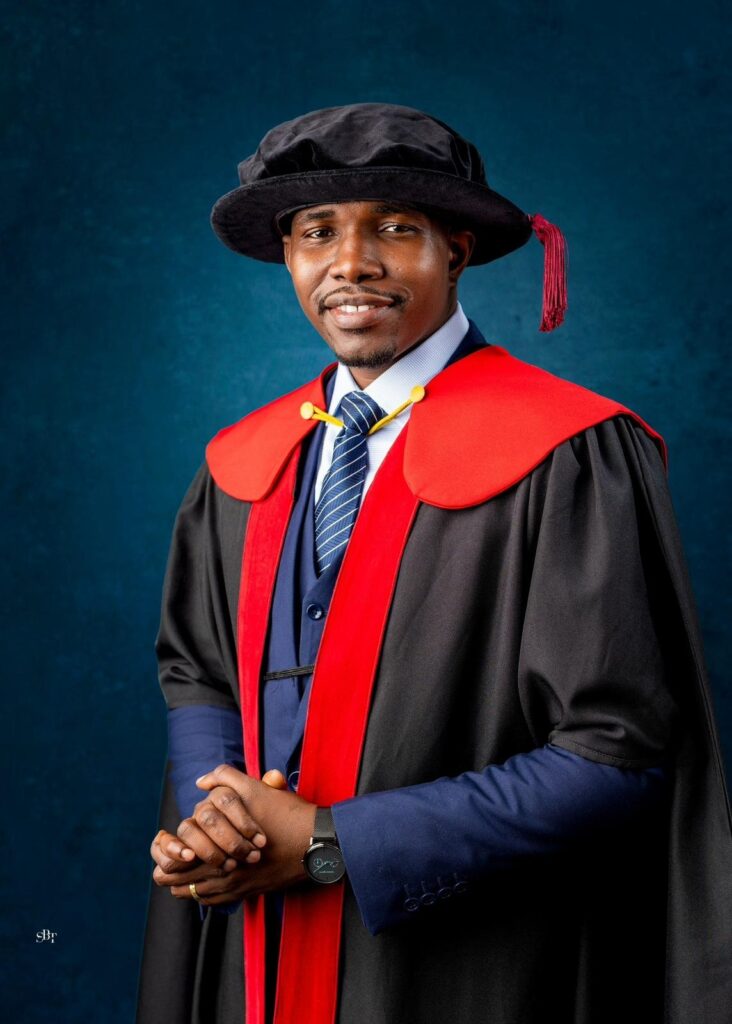
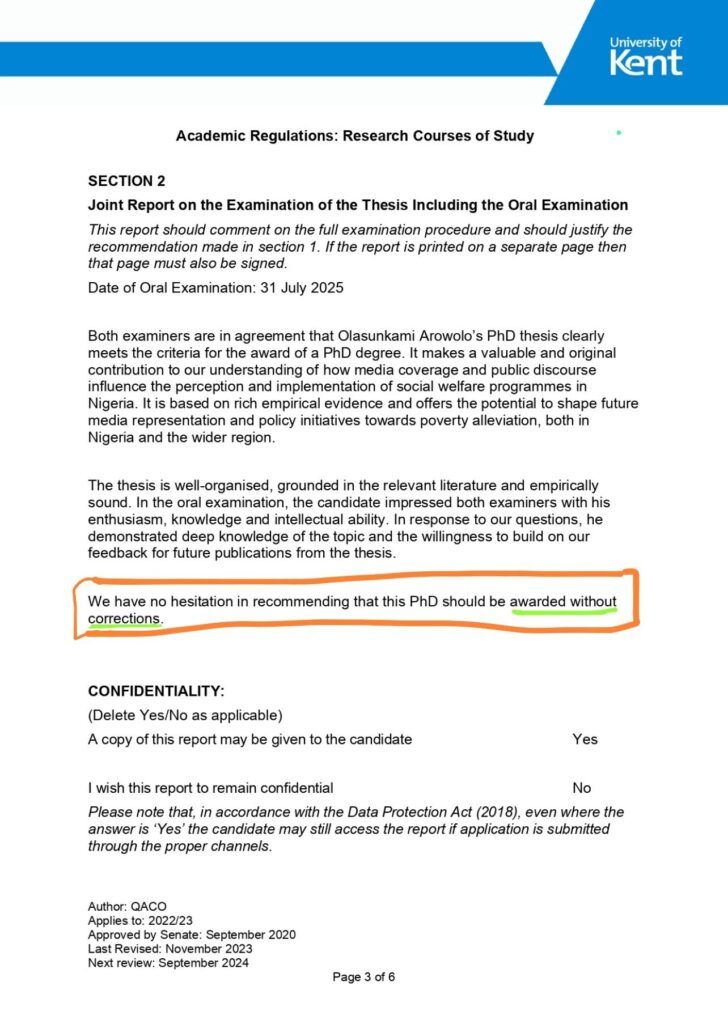
It wasn’t until February 2025 that I began to take the idea seriously. By then, I was finalising my PhD and reflecting on the broader impact of my work. In May 2025, I completed my degree with the rare distinction of being awarded with no corrections required – a milestone that gave me both peace and clarity about the quality of my research journey.
As I began mapping out postdoctoral options, I realised that my research – situated at the intersection of journalism, politics, and digital governance – naturally fit within the British Academy’s scope of humanities and social sciences. It was at that point that the Global Talent route became less of an abstract concept and more of a tangible opportunity to continue my work at a global level.
Choosing Between UKRI and the British Academy
By July 2025, I was weighing my options between two endorsing bodies: UKRI (UK Research and Innovation) and the British Academy.
While UKRI caters to a wide range of research disciplines, the British Academy specifically supports scholars in the humanities and social sciences – areas that perfectly reflected my research profile.
Another deciding factor was that I had previously contributed to a British Academy-funded project, which gave me a sense of alignment with their research values and expectations. Choosing the British Academy felt natural, and once that decision was made, I directed all my preparation toward building a coherent, evidence-based application.
Building My Application: Strategy and Structure
The Global Talent endorsement process requires more than impressive qualifications. It demands clarity, evidence, and a coherent narrative that connects your past achievements to your future potential.
I approached it like a research project: with structure and precision.
1. Understanding the Criteria
I studied the British Academy’s guidelines carefully. I mapped each requirement against my existing achievements – publications, leadership experiences, impact projects, and teaching roles. This helped me identify strengths, address gaps, and align my documentation to each criterion.
2. Curating Evidence
I created a structured evidence folder that included:
- Peer-reviewed journal publications
- Teaching and supervision records
- Project outcomes and digital innovations
- Speaking engagements and research dissemination efforts
3. Framing Impact
Impact is often what distinguishes a strong application from a great one. I focused on demonstrating how my work influences both academic and non-academic spaces – from policy debates on poverty discourse in Nigeria to educational innovation through my digital platforms.
Integrating My PhD and Professional Pathways
My PhD formed the intellectual backbone of the application, but what strengthened it was how I had translated research into real-world influence.
I highlighted:
- My cross-sectoral experience across education, media, and technology.
- My leadership of projects and ventures such as OA MediaKraft, Research Africa Publications, and Tutor.OlaArowolo.com, all of which connect academic insight with social impact.
- My teaching and mentoring record across institutions in the UK and Nigeria, which demonstrated commitment to knowledge exchange and community building.
Together, these experiences told a story of applied scholarship – research that doesn’t stay on paper but shapes people, policy, and practice.
The Role of Mentorship and Community
One of the most valuable parts of my journey was the guidance I received from mentors and peers. I reached out to individuals who had either been through the process or were deeply familiar with the expectations of global research recognition.
Their advice helped me refine my materials and understand that the strength of an application lies in coherence – how well your story aligns across your statement, CV, and references.
Mentorship also taught me that humility and precision go hand in hand. The process isn’t about inflating achievements; it’s about clearly communicating their significance.
Preparing Letters of Recommendation
The recommendation letters are central to the endorsement, and I approached this step with careful planning.
I identified referees who could speak credibly about different dimensions of my work:
- Academic rigour and originality,
- Professional leadership and impact,
- Ethical and community-oriented engagement.
I provided them with concise summaries of my achievements and explained how their perspectives complemented the overall application narrative. This coordination ensured that each referee highlighted a distinct strength without overlap.
It also saved them time and created consistency – something I would strongly recommend to anyone going through the same process.
Faith, Discipline, and Perspective
Beyond the logistics, the journey was deeply personal. There were moments of uncertainty – especially around timing and whether I had truly done enough. In those moments, I leaned on faith, prayer, and reflection.
For me, prayer was not an act of desperation but a practice of clarity. It helped me remain calm, patient, and focused. I made a conscious effort not to rush decisions but to prepare thoroughly and move when the time felt right.
That discipline – balancing preparation with reflection – kept me grounded and gave me the assurance that, whatever the outcome, the process itself was worthwhile.
Receiving the Endorsement
When I received the news of my endorsement from the British Academy, it was a quiet but deeply meaningful moment. There was no dramatic celebration – just gratitude.
It felt like a culmination of years of consistent work across different fields: teaching, research, digital innovation, and leadership. It also reaffirmed something I have always believed – that recognition often follows preparation, not noise.
Lessons for Future Applicants
For anyone considering applying for the Global Talent route, here are some lessons that shaped my experience:
- Be clear on your motivation. The process is not just about eligibility but purpose. Understand why this step matters for your career and long-term contribution.
- Keep detailed records. Document your achievements, projects, and measurable outcomes early. It will save you stress later.
- Study the criteria carefully. Don’t guess – align your materials precisely with what the endorsing body values.
- Seek mentorship and community. Learn from others’ experiences. It helps you avoid pitfalls and refine your presentation.
- Choose your referees wisely. Select those who can vouch for different aspects of your career – not just academics, but professionals who understand your broader impact.
- Stay grounded. Whether through faith, reflection, or quiet focus, keep your process purposeful. Confidence is built through preparation.
- Tell your story authentically. Avoid exaggeration. Consistency and truthfulness make a stronger impression than embellishment.
Looking Back, Moving Forward
Looking back, this endorsement is more than a milestone; it’s a reflection of a journey that combined research excellence with practical impact. It represents the years of persistence, mentorship, and community support that have shaped who I am as a researcher, educator, and consultant.
As I continue my work at the intersection of journalism, digital governance, and education, I see this not as a finish line but as a foundation – a call to expand impact and create spaces for others to grow.
I hope this story offers clarity and encouragement to emerging scholars, innovators, and practitioners – especially those from developing contexts – that global recognition is possible when your work carries substance, your preparation is intentional, and your purpose remains clear.
Leave a Reply to Marycynthia Cancel reply